

The Earliest Drawing of the Moon?
The date of the first known drawing of the Moon has been pushed back by more than a century. The earliest known drawing of the Moon is in a painting by Dutch master Jan van Eyck painted nearly 600 years ago, according to scientist Scott Montgomery of Seattle, USA.
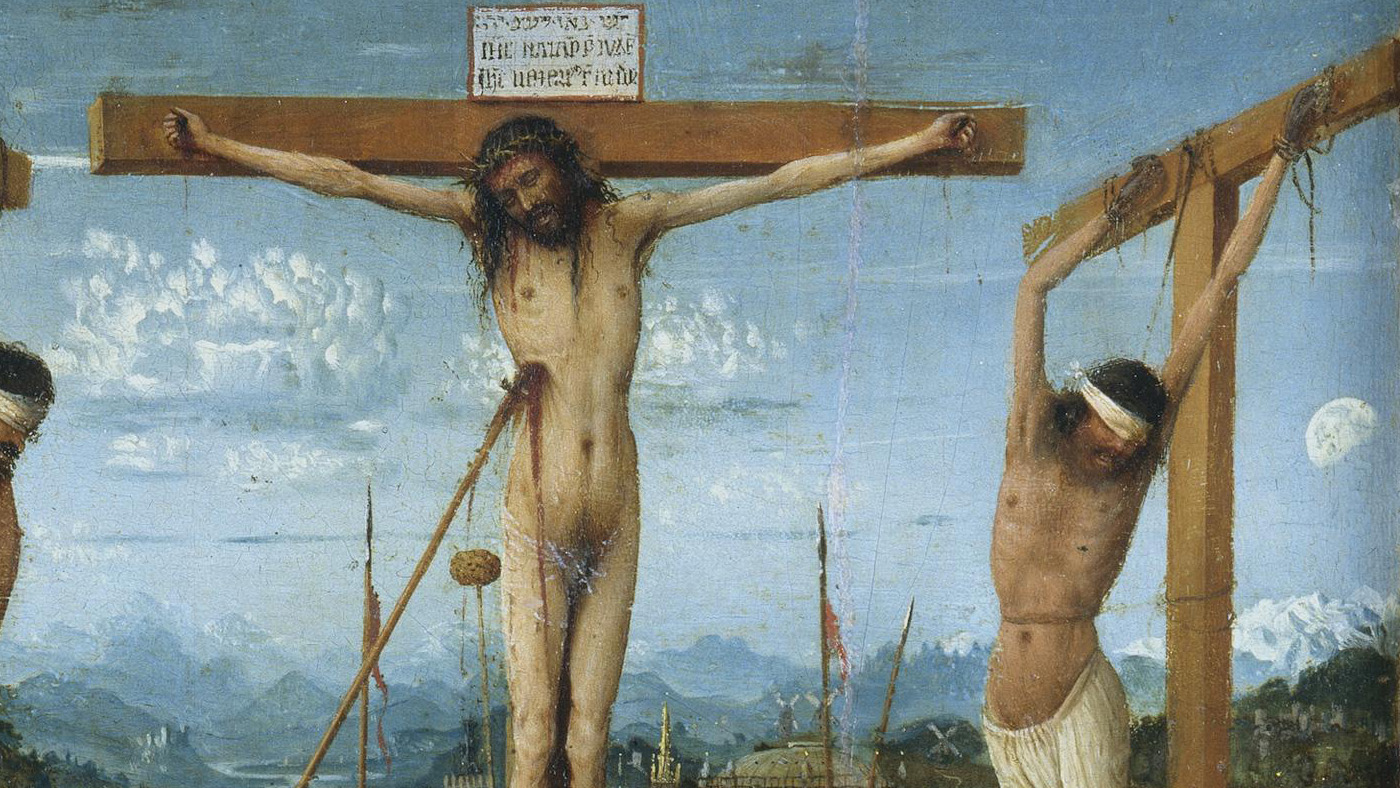
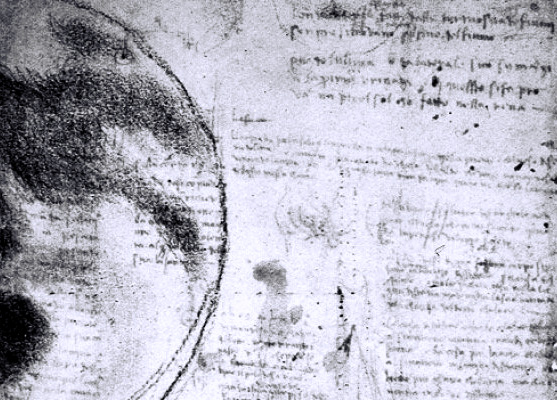
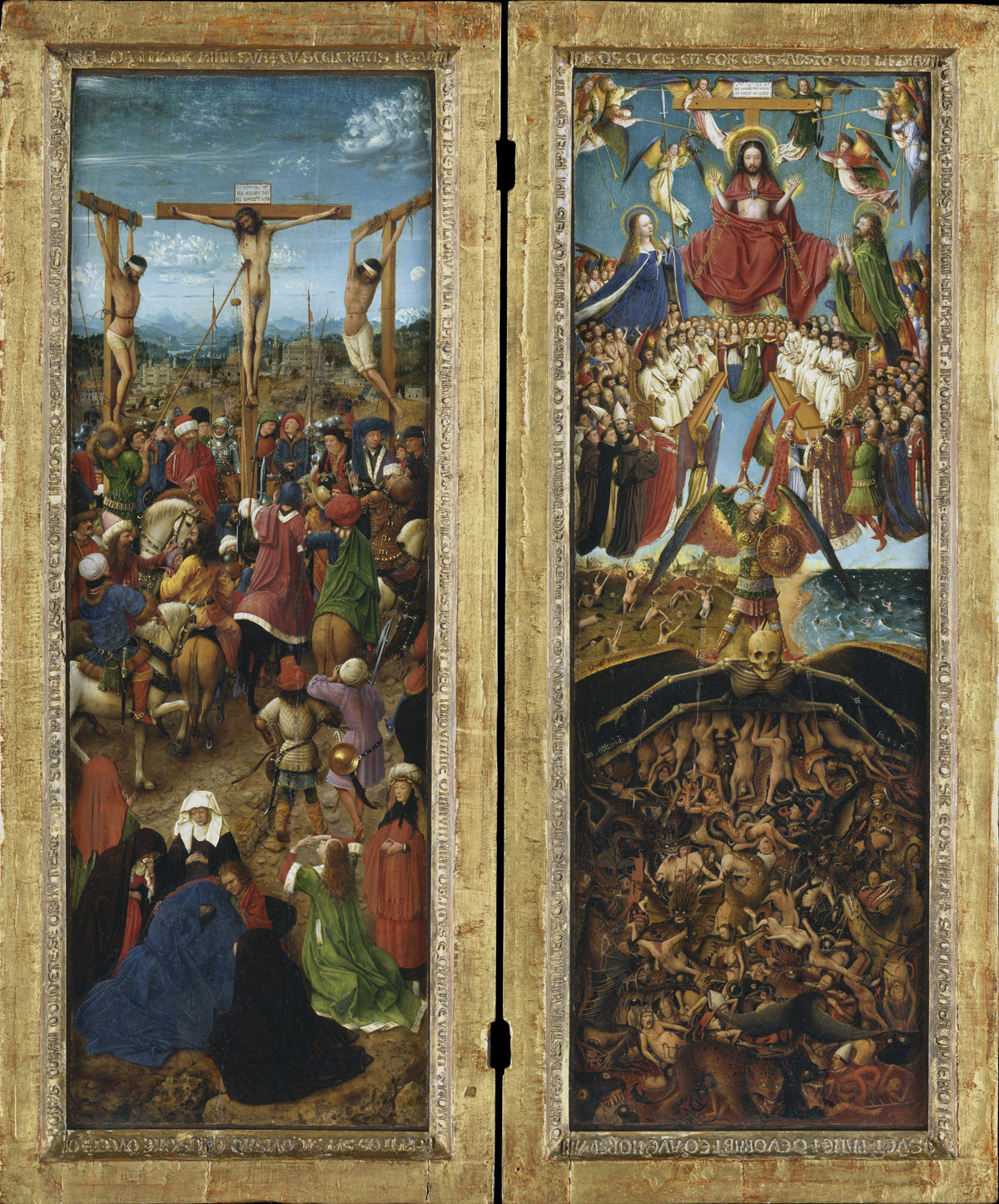
It is proving to be quite a year for rewriting the books about what we know of mankind's attempts to chart the Moon. Earlier this year BBC News Online caused a sensation when we published details of what appears to be a 5,000 year-old map of the Moon, carved into rock inside a Neolithic passage tomb in Ireland. Before the stone map was revealed it was generally thought that the oldest known drawing of the Moon was by Leonardo da Vinci in about 1504. That is what the history books say. But they should be re-written according to Mr Montgomery. He is geologist by training and is writing a book called "The Moon and the Western Imagination". He says it was Jan van Eyck (1385? - 1441) who first accurately depicted the Moon, over a hundred years before Leonardo's notebook sketch. In his revolutionary paintings van Eyck depicted the Moon four times and painted it the way it really appeared. Perhaps the best painting of the Moon he did was in his "Crucifixion". "This painting of the crucifixion overturns a thousand years of traditionally painting this scene," says Mr Montgomery. Van Eyck was perfecting painting in oils and breaking free from centuries old painting conventions. He was among the first to allow his characters to cast shadows. In the crucifixion scene a pale Moon is visible on the right-hand side of the canvas. It is small but it is painted naturalistically and some surface features can be recognised. Leonardo's drawings are clearly an advance on van Eyck's. They have been called a lunar "field sketch" and clearly represent a new phase of mapping the Moon. Leonardo was interested in it as a place. He wanted to know what it was really like.
<
We will probably never know what Jan van Eyck thought of the Moon - none of his notebooks survive, only his paintings.
The Moon is a Spaceship
In 1970, two Soviet astronomers had been studying the satellite and theorized that it was likely a hollow moon put in place by a highly-advanced extraterrestrial race. Their theory was based on these observable anomalies, claiming the Moon was an artificial shell that had been inhabited internally for years. While it might seem farfetched that we are being surveilled by an extraterrestrial race in the moon, or that a hollow Moon may have been intentionally placed in Earth’s orbit, there are a plethora of inexplicable facts about its relationship with Earth. To this day, there are several theories that attempt to explain how the Moon ended up orbiting our planet, though none have been absolutely accepted, leading many to believe that the moon is a spaceship.
Babalon Working
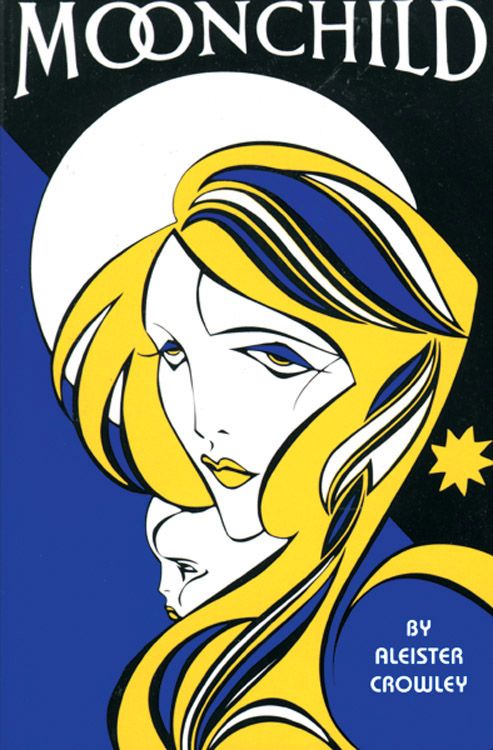
The Babalon Working was a series of magic ceremonies or rituals performed from January to March, 1946 by author, pioneer rocket-fuel scientist, and occultist Jack Parsons and Scientology founder L. Ron Hubbard. This ritual was essentially designed to manifest an individual incarnation of the archetypal divine feminine called Babalon. The project was based on the ideas of Aleister Crowley, and his description of a similar project in his 1917 novel Moonchild. When Parsons declared that the first of the series of rituals was complete and successful, he almost immediately met Marjorie Cameron in his own home, and regarded her as the elemental that he and Hubbard had called through the ritual. Soon Parsons began the next stage of the series, an attempt to conceive a child through sexual magic workings. Although no child was conceived, this did not affect the result of the ritual to that point. Parsons and Cameron, who Parsons now regarded as the Scarlet Woman - Babalon - called forth by the ritual, soon married. The rituals performed drew largely upon rituals and sex magic described by English author and occult teacher Aleister Crowley. Crowley was in correspondence with Parsons during the course of the Babalon Working, and warned Parsons of his potential overreactions to the magic he was performing, while simultaneously deriding Parsons' work to others.
Modern Pagans often think of Isis as a Moon Goddess. And, it’s true, in later periods of Her worship, She was indeed associated with the Moon—and, in fact, that’s how She entered the Western Esoteric Tradition.
